Susan Murphy Milano | PASSAGE AWARD
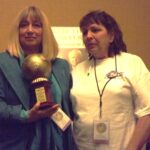
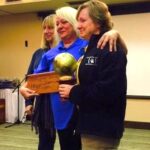
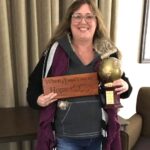
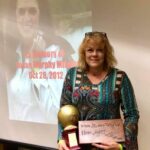
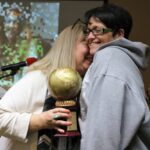
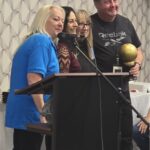
 “This award is given to an individual, who has suffered the loss of a loved one by being a missing person, victim of homicide or one that has survived the cruelties from intimate partner violence. This award recognizes the survivor that has healed and who has risen above to contribute oneself to those who remain in need of guidance, empowerment, support and who continually hold a devotion to the cause.”
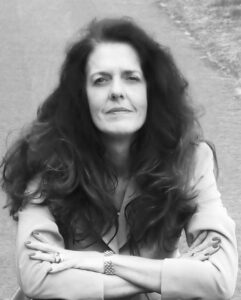
Who was Susan? “Even without the media, she couldn’t escape being noticed-she’s almost 6 feet tall in heels, with long, red fingernails and a mane of red hair so impressive that a haircare company executive once tried to talk her into doing a shampoo commercial. But the two bodyguards constantly at her side tend to discourage people from approaching her.” (Chicago Tribune, Domestic Detail, October 1993)
After the tragic murder–suicide of her parents, the life of Susan Murphy Milano was forever changed.
Susan was raised in a home marked by contradiction. Her father was a decorated Chicago police officer; her mother endured severe domestic abuse. As a child, Susan lived in the shadow of violence, witnessing firsthand the devastating impact it had on her family. Those early experiences shaped her life’s work. She made a commitment to ensure that victims of abuse would be heard, believed, and protected even if they were silenced.
In the Chicago area, Susan became known as a fierce and determined advocate for victims of domestic violence. She was unafraid to challenge systems that failed survivors. Often accompanying victims into courtrooms, she worked to ensure they were represented with dignity and strength. Susan understood how to navigate both the press and the legal community, using unconventional methods when necessary to shine light on cases others overlooked. Her voice became a lifeline for those living in fear.
 In 2007, the disappearance of Stacy Peterson deeply captured Susan’s attention. Stacy, married to a Bolingbrook, Illinois police officer, was reported missing under troubling circumstances. Susan immediately recognized the warning signs, patterns she knew all too well from her own childhood. As national attention grew, she began writing and speaking about the case, bringing insight rooted in lived experience.
From this case emerged one of Susan’s most important contributions: the Evidentiary Abuse Affidavit (EAA). Introduced in her 2010 book, Time’s Up: A Guide on How to Leave and Survive Abusive and Stalking Relationships, the EAA provided a simple yet groundbreaking tool for victims to document, preserve, and securely store evidence of abuse, empowering them with a record that could not easily be erased. Her legacy remains through DocumenttheAbuse.Org where the EAA is currently housed.
As Susan’s advocacy gained national visibility, she became increasingly aware of the overlap between domestic violence and missing persons cases, particularly women who vanished under suspicious or abusive circumstances. It was through this work that she became acquainted with the CUE Center for Missing Persons and its founder, Monica Caison. Susan began following CUE’s cases closely and featured many of them on her podcast, helping bring national attention to families still searching for answers.
Her compassion, insight, and expertise led to her invitation as an instructor at CUE’s annual National Missing Persons Conference. There, families and volunteers experienced firsthand her dedication to justice and survivor advocacy. She returned year after year, building lasting bonds within the CUE community and standing alongside those navigating unimaginable loss.
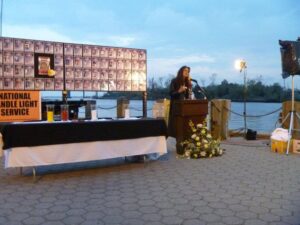
 Although Susan passed away in 2012, her legacy lives on within the CUE Center family. Each year, CUE presents the Passage Award in her honor. This meaningful recognition is given to an individual who has endured the loss of a missing loved one or survived an abusive relationship and who has risen above their circumstances to serve and support others.
It is both a privilege and a profound honor to continue celebrating Susan’s legacy by standing beside those who transform pain into purpose, just as she did.